
Setting up your Google Maps Profile isn’t just a digital chore; it’s the most powerful ranking signal you have. It gives Google the “queue” to steer the right patients to your front door.
In a highly competitive South African market, the difference between a thriving practice and one that is “invisible” often comes down to a single drop-down menu: Your Business Category.
The “Lost in the Crowd” Factor
Many practice owners chase the high search volume of “Generic Medical” terms, thinking a bigger net catches more fish. In reality, this is a “losing” strategy for three reasons:
- Competitor Density: In “Generic Medical,” you aren’t just competing with physios. You’re up against hospitals, GPs, pharmacies, and dentists. You become a small fish in a vast ocean of noise.
- The Intent Gap: Google’s algorithm prioritises the closest match to a user’s intent. If someone searches for a “Physiotherapist,” and you are labelled as a “Medical Clinic,” Google will bypass you for a correctly categorised competitor—even if they have fewer reviews.
- Efficiency of Intent: A person searching for “Back Pain Treatment” is five times more likely to book an appointment immediately than someone searching for a “Medical Clinic,” who might just be looking for a flu shot.
By narrowing your focus to “Physiotherapist” you transition from being “one of thousands” to “one of the top few.” This shift dramatically increases your chances of appearing in the coveted Google Local Pack (the 3 results).

The Power of the “Primary” Category
Google offers over 4,000 categories. You can choose 10, but the Primary Category is the undisputed king. It dictates your main search ranking and the “features” (like booking buttons) that appear on your profile. For a physiotherapist, “spraying and praying” with too many irrelevant categories can dilute authority, so the goal is to hit the specific niche that matches your actual patient mix. Order matters, as the Primary and secondary are the first indicators.
To cover the full spectrum of a modern practice, these are the specific Google-defined categories you should look for.
The Core “Must-Haves”
- Physiotherapist: The gold standard for individual practitioners.
- Physical Therapy Clinic: The best primary category for a brick-and-mortar facility with multiple staff. A common secondary choice to capture slight variations in search terminology.
Secondary: Specialising Without Disappearing
These are high-value, specialized niches where the “Trust Gap” is even wider because patients are often dealing with sensitive or complex long-term conditions. They aren’t just looking for “a physio”; they are looking for a specialist.
- Sports Medicine Clinic: High-impact for practices focusing on athletes and injury recovery.
- Rehabilitation Centre: Useful if the practice offers post-surgical rehab.
- Pediatric Physical Therapist: For practices specialising in children/infants.
- Home Health Care Service: For home-based care offered.
- Occupational Therapist: Often collocated with physio; a vital secondary category if applicable.
- Physical Examination: Captures patients searching for physical examination, non-instrument-based treatment.
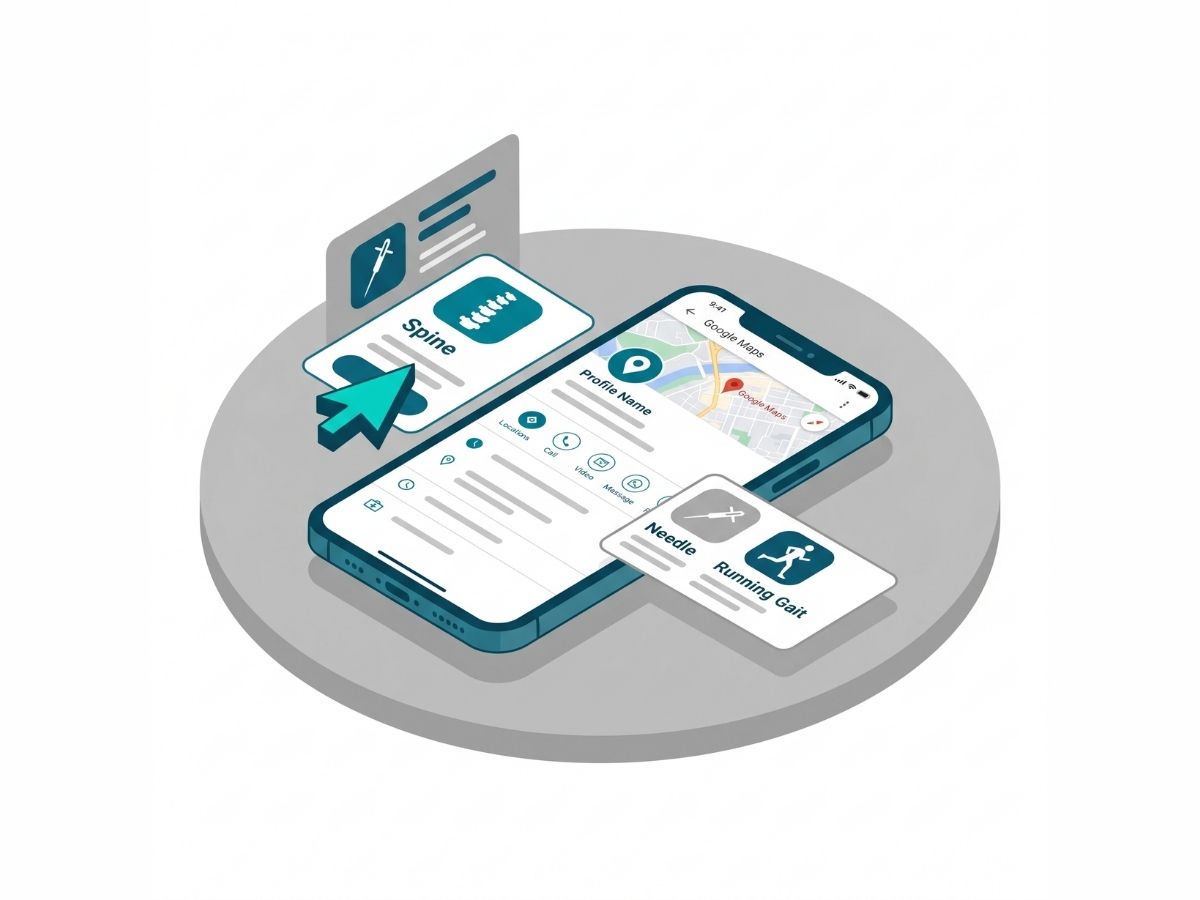
Related “Wellness” Categories
- Massage Therapist: Specifically for “Sports Massage” or “Remedial Massage” components of the practice.
- Orthopaedic Clinic: Only if an orthopaedic surgeon is on-site, but helpful for search relevance in joint replacement recovery.
- Wellness Centre: Only if they offer holistic services (use with caution, as it’s broad).
Google’s algorithm is sensitive. If a practice is a highly specialised sports physiotherapy practice, its setup should look like this:
| Priority | Category Name | Strategic Intent |
|---|---|---|
| Primary | Physiotherapist | Captures individual name searches. |
| Secondary 1 | Sports Medicine clinic | Dominates searches for athletic injuries. |
| Secondary 2 | Physical Therapy Clinic | Maintains broad “physio” relevance. |
Since Google doesn’t have a “Pelvic Floor Physio” category yet, we use Bridge Categories:
- Neuro Strategy: Keep Physiotherapist as Primary, but add Rehabilitation Centre and Home Health Care Service as Secondary to capture mobile rehab searches. This adjustment signals complexity and ensures appropriate equipment for the algorithm.
- Pelvic Health Strategy: Use Women’s Health Clinic as a secondary category. This is the most common way patients search for pelvic floor issues.
Strategies You Must Implement
To improve your search visibility in a highly competitive Physiotherapy market, you must follow this thinking process before executing your changes:
- 1Compete in a Market You are Qualified to Label:
Push the generic competition out of your field of expertise by claiming your specific niche. - 2Prioritise Your Target to Your Ideal Patient:
Define your Primary category based on who you actually want walking through the door, not just who might search for “doctor.” - 3Carefully Choose Your Speciality Category:
Guide search intent by selecting the order of your secondary categories. - 4Publish and Update:
Your practice category in Google My Business Profile is not static; it requires consistent oversight..
Less than 10% of physiotherapists optimise their secondary categories.
By fixing yours today, you move from “one of thousands” to the “top of the Pack.”

The “Folder vs File” Logic: Winning the Search for Symptoms
Choosing your category is like picking the right folder for your practice in Google’s massive filing cabinet. It ensures you are in the right drawer. However, being in the right folder only gets you into the general search results.
To actually rank for specific symptoms—the things your patients are actually typing into their phones at 2 AM—you need to master the Services section. If Categories are the folders, Services are the individual files inside that convince Google you are the exact answer to a specific problem.
Why Services are the Key to “Zero-Distance” Ranking
While a category like “Physiotherapist” puts you in the race, the Services section is what helps you win the “Long-Tail” search. In 2026, patients search for solutions, not just professions. They search for:
- “Dry needling for neck pain near me”
- “Stroke recovery home exercises”
- “Pelvic floor therapy after C-section”
If these specific terms aren’t in your “Files” (Services), Google won’t feel confident enough to show your profile above a competitor who has explicitly listed them.
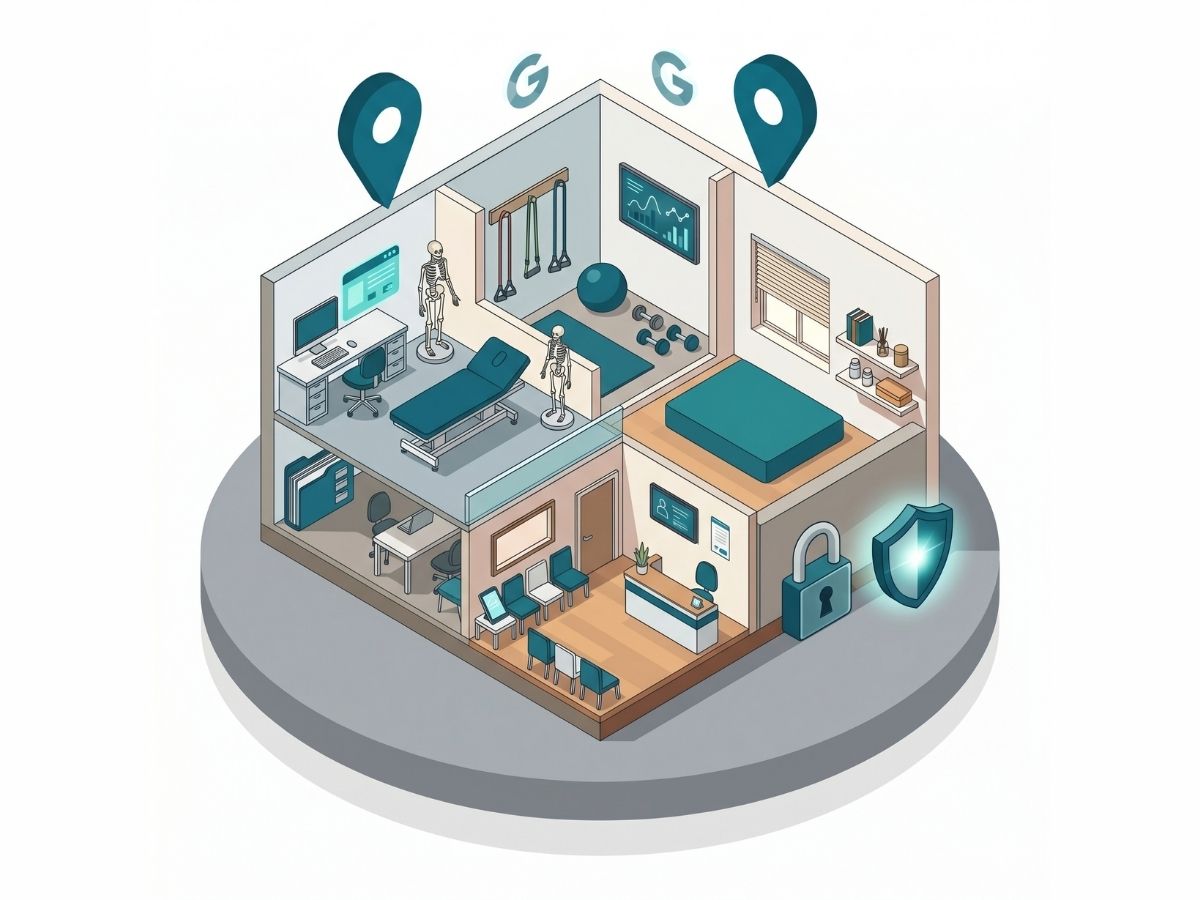

How to Build a High-Conversion Services Section
To maximise your visibility, you should structure your services into clusters that mirror your clinical specialities:
1. Symptom-Based Services (Capture the Pain)
Instead of just “Consultation,” list the specific pains you resolve:
- Lower Back Pain Treatment: Focuses on the most common search query in SA.
- Sciatica Management: Targets chronic sufferers looking for a specialist.
- Sports Injury Rehabilitation: Essential for athletic-focused practices.
2. Modality-Based Services (Capture the Technique)
Many patients search for a specific way of being treated:
- Dry Needling & Acupuncture: High search intent for immediate relief.
- Manual Therapy & Joint Mobilisation: What sets you apart from “exercise-only” gyms?
- Vestibular Rehabilitation: A powerful niche service for Neuro practices.
3. Speciality Bridge Services (The “Pelvic & Neuro” files)
Since categories for these are limited, the Services section must do the heavy lifting:
- Pelvic Floor Dysfunction Therapy: Crucial for Women’s Health visibility.
- Neurological Mobility Training: Vital for ranking in stroke and Parkinson’s searches.
- Geriatric Fall Prevention: Targets a specific, high-intent demographic.
4. The “SA Context” Services (Preparation is Professionalism)
In South Africa, “Service” extends beyond the treatment plinth. It includes the environment and reliability of your facility:
- Uninterrupted Care (Loadshedding Ready): List this to tell patients their treatment (and your laser/IFT machines) won’t stop when the grid does.
- Secure On-Site Parking: For many SA patients, safety is the first hurdle. Listing this “service” removes a major booking barrier.
The Service Optimisation Rule
Each service allows for a 300-character description. This is where most owners leave money on the table. Don’t just list the name; describe the outcome.
Example:
-
- Bad: “We do Dry Needling.”
- Top 10%: “Our specialised Dry Needling sessions target chronic trigger points to provide rapid relief from tension headaches and neck stiffness. Ideal for office workers and athletes alike.”
3 Strategies to Weaponize Your Services
To turn your Services section from a list into a lead-generation machine, implement these three tactical shifts:
- 1
The Keyword Mirror:
Don’t use clinical jargon that patients don’t understand. Use the language they use in their reviews. If patients constantly mention “relief from pins and needles,” make sure “Nerve Pain & Sciatica Relief” is a listed service. - 2
The “Check-In” Update:
Google prioritizes active profiles. Every time you introduce a new piece of equipment (like a new shockwave machine or pelvic floor biofeedback unit), add it as a service immediately. This freshness tells Google you are the most “up-to-date” option in the area. - 3Outcome-First Descriptions:
Use the first 80 characters of your service description to state the benefit. Patients often scan these on mobile devices; if they see “Walk without pain again” before they see “Gait analysis,” you’ve already won the emotional click.
The Competitive Gap:
Our internal audits show that less than 15% of physiotherapy practices globally—and even fewer in South Africa—bother to list their specific services on their Google Business Profile. Most simply leave it blank or rely on Google’s automated (and often incorrect) suggestions. This is your biggest opportunity to leapfrog the competition.
Visual Proof: Closing the “Trust Gap”
By aligning your “Folders” (Categories) with your “Files” (Services), you’ve mastered the technical side of being found. However, visibility does not equal conversion. In 2026, the final barrier between a search result and a booked appointment is Visual Proof.
Why Visuals are the “Closer”
If Categories get you into the race and Services prove you have the solution, Visuals prove you are safe and professional. A patient searching for Pelvic Health or Neuro rehab is vulnerable. They aren’t just looking for a therapist; they are looking for an environment where they feel comfortable, trusted and safe.

1. The Walkthrough Video (Your Undeniable Island)
In South Africa, less than 5% of practices use video on their Google Profile. This is your “Blue Ocean”—a space where you cease to compete and start to dominate.
When a patient is navigating the “vast ocean of noise”—the thousands of generic, text-heavy medical listings—they are often on a voyage of uncertainty. They are searching for the ‘right place’ but are met with a sea of clinical sameness. By introducing high-quality video, your practice becomes the undeniable island. You aren’t just another coordinate on a map; you are a beacon of hope. A walkthrough video acts as a lighthouse, cutting through the fog of search results to show the patient exactly where they are going, who will greet them, and the safety of the sanctuary you’ve built.
- For Neuro (Accessibility is Autonomy): Show the harness systems, the wide corridors, and the wheelchair-friendly entrance.
Justification: Families and patients dealing with neurological conditions are calculating the “logistics of effort” before they book. Seeing a ramp or a specialized lift isn’t just a feature; it’s a promise of dignity and ease of access.
- For Women’s Health & Pelvic Floor (Privacy is Safety): Show the private, enclosed consultation rooms and the warm, non-clinical waiting area. Avoid showing medical instruments; focus on soft lighting and privacy.
Justification: This is the most sensitive niche in physiotherapy. A patient needs to visually confirm that they won’t be treated behind a thin curtain in a loud gym. Visual proof of a private “sanctuary” space lowers the psychological barrier to booking.
- For Sports (Energy is Results): Show the gym floor, the advanced recovery tech (like AlterG or force plates), and the energy of the space.
Justification: Athletes want to know they are entering a high-performance environment. Showing the “tools of the trade” justifies your premium pricing and positions you as a specialist clinic rather than a generalist.
The Goal: Remove the “fear of the unknown” by letting the patient walk through your door virtually before they arrive.
2. The Golden Standard vs. The Stock Photo Trap
Using stock photos on your Google Profile is the ultimate irony of clinical marketing. It’s like trying to prove you’re a local expert by showing a picture of a Swedish fitness model doing a lunge in a studio in Malibu. The patient knows it’s fake, Google’s AI knows it’s fake (and will de-prioritise you for it), and it creates a “Trust Deficit” before you even meet.
Think of it this way: buying a burger that looks like a gourmet masterpiece in the advert but arrives looking like a squashed hockey puck is a disappointment we’ve all faced. Don’t do that to your patients. When your profile shows a generic doctor with a blindingly white smile holding a clipboard, and they walk into a real, busy South African practice, the disconnect is jarring.

The Golden Standard is Radical Authenticity:
- Real People, Real Care: Replace the Swedish models with action shots of your actual staff performing manual therapy or guided exercises. These photos build immediate empathy because the patient can see the hands that will be treating them.
- The Treatment Room (The Sanctuary): Especially for Pelvic Health, a clean, private, and warm consultation room photo can increase bookings by over 40% compared to a sterile clinical shot. It proves the environment is built for their comfort, not just for medical utility.
- The “Proudly Prepared” Factor (The SA Context): Show your resilience. A photo of your solar panels or even a comical shot of your “practice-saving” generator tells a story of a business that is prepared and human. Highlighting your secure street access, sturdy gates, or the guarded parking area isn’t “un-aesthetic”—in South Africa, it’s a high-value signal of safety and reliability. It tells the patient, “We’ve thought of everything so you don’t have to.”
3. Team Authority Shots
Patients connect with people, not logos.
- The “Friendly Expert”: A professional headshot of the lead physio in their clinical gear bridges the gap between “medical authority” and “human connection.”
- Overcoming the “Camera Shy” Insecurity: Many practitioners hesitate to put their own face on their profile, fearing they aren’t “model-like” enough. This is a missed opportunity. In the South African context, local patients aren’t looking for a celebrity; they are looking for a neighbour they can trust. A real-world photo resonates far more deeply than a polished corporate facade. Your “imperfections”—a genuine smile, a busy desk in the background, or your familiar local clinic setting—are actually your greatest trust-building assets. They prove you are a real person ready to help a real neighbour.
The “Visual Recency” Factor
Google rewards profiles that upload new photos regularly. A profile with 50 photos from 2021 looks “closed” compared to a profile with 10 photos from last month. Aim for one high-quality “behind the scenes” photo every two weeks to signal to the algorithm that your practice is thriving.
The 3-Minute Implementation Checklist
Don’t let this become just another article you read and forget. Open your Google Business Profile manager now and complete these three steps to enhance your practice and connect with the patients searching for you:
- 1
Check Your Primary Folder:
Is it “Physiotherapist” or “Physical Therapy Clinic”? If it’s “Medical Clinic,” change it now. (Time: 30 seconds)
- 2
Audit Your Files (Add your Practice Services):
Open your Services and add highly specific details about the types of treatment your physiotherapy practice treats. (Time: 90 seconds) - 3Upload One “Radically Authentic” Photo:
Take a quick photo of your team, your solar panels, or your private treatment room sanctuary. No filters, no stock models—just your real practice. (Time: 60 seconds)
From Invisible to Undeniable
By committing these three minutes to your digital presence, you aren’t just “updating a profile”—you are fundamentally changing the viability of your practice. When you align your clinical expertise with Google’s search intent, the effect is measurable and immediate. On average, practices that shift from generic categories to niche-specific “Folders” and detailed “Files” see a 30-50% increase in new patient discoveries per week and a 25% jump in direct website visits within the first month. In the South African landscape, where safety and reliability are paramount, your “Visual Proof” acts as the final handshake that secures the booking. Stop leaving your growth to chance and word-of-mouth alone; weaponize your Google Profile and become the undeniable island in your community.
This is the first article in the series about the mechanics of being found, the second article in this series: Google my Business Momentum Multiplier is about the psychology and strategy of being chosen and retained.